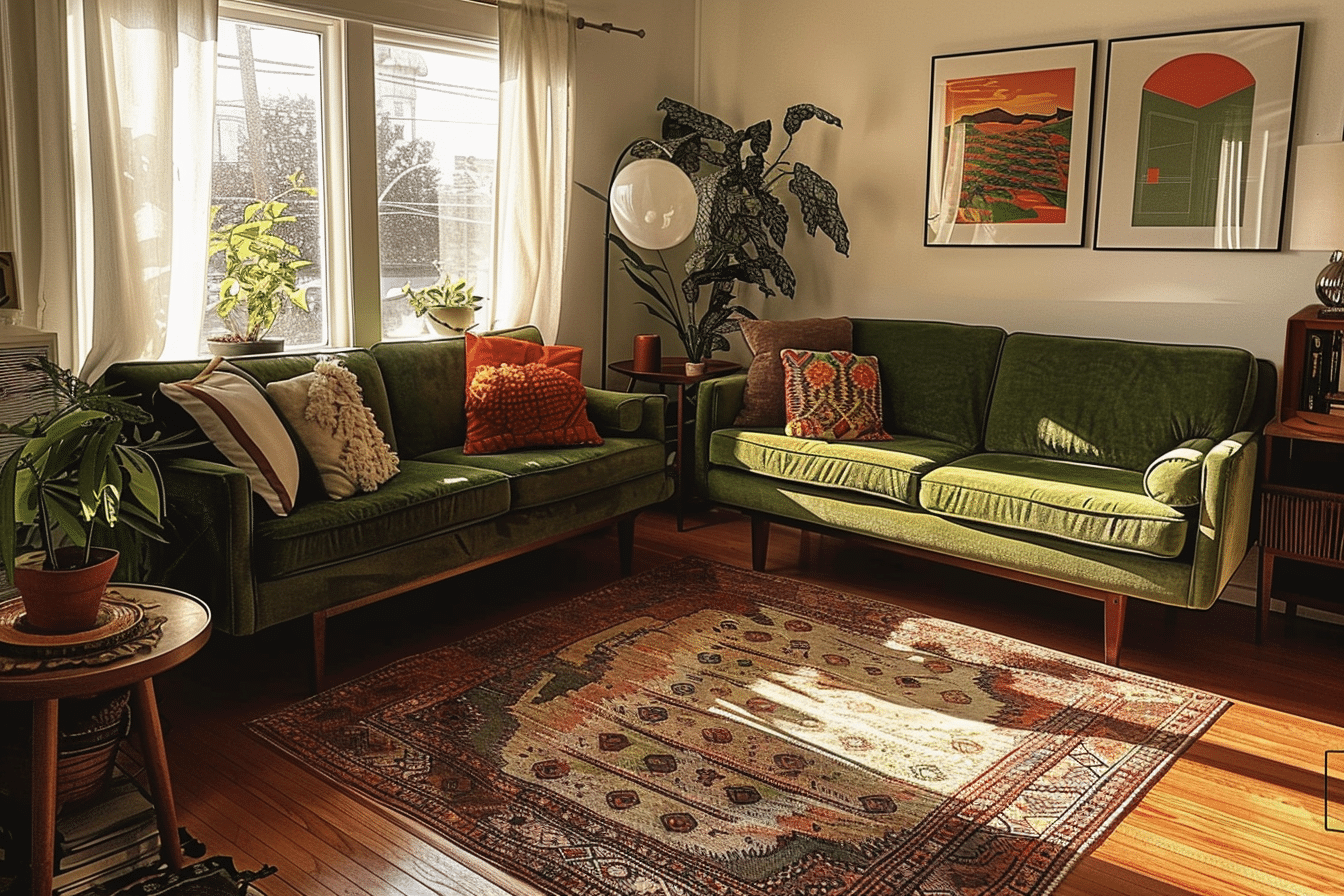
Creating a vintage and cozy living room with a green sofa and bold rug is one of the most rewarding interior design projects you can undertake. This design approach combines nostalgic charm with contemporary comfort, blending rich textures, warm tones, and statement pieces that tell a story. Whether you’re drawn to mid-century modern aesthetics or classic vintage elegance, a vintage and cozy living room green sofa paired with eye-catching rug designs can transform your space into a sanctuary of style and warmth.
The beauty of this design trend lies in its versatility and emotional appeal. A green sofa serves as both a bold focal point and a soothing anchor that invites relaxation. When paired with a complementary bold rug, the combination creates visual depth, defines your space, and establishes an atmosphere of timeless sophistication. In this comprehensive guide, we’ll explore how to master this design aesthetic and create a living room that feels both luxurious and inviting.
Table of Contents
Understanding the Vintage and Cozy Living Room Aesthetic
The vintage and cozy living room aesthetic represents a deliberate departure from minimalist trends. It celebrates comfort, character, and collected beauty. This style embraces warm lighting, layered textures, and furnishings that carry history and personality. A green sofa becomes more than furniture it becomes a statement of intentionality and refined taste.
Vintage design draws inspiration from various eras, most commonly the 1950s through 1970s. Cozy design, meanwhile, emphasizes comfort, warmth, and intimate spaces where people genuinely want to spend time. When these elements merge with the strategic placement of a bold rug, you create an environment that feels both sophisticated and welcoming.
The green sofa, in particular, brings a natural, calming quality to your space. Green represents growth, renewal, and balance psychological triggers that make people feel safe and comfortable. Combined with the visual impact of a bold rug featuring geometric patterns, rich colors, or vintage-inspired designs, your living room becomes a curated masterpiece.
Choosing the Perfect Green Sofa for Your Vintage Living Room
Selecting the right green sofa requires understanding color depth, fabric quality, and how it coordinates with your overall design vision. Not all greens work equally well in a vintage aesthetic. Consider these options:
Color Variations to Consider
- Sage Green: A muted, dusty green that evokes vintage botanicals and pairs beautifully with warm neutrals. This shade feels sophisticated without overwhelming the space.
- Forest Green: A deeper, richer tone that commands attention and works well in rooms with ample natural light. It creates dramatic elegance and pairs wonderfully with jewel-toned accents.
- Olive Green: A warm, earthy tone with golden undertones that feels authentically vintage. This shade works particularly well with mustard yellows, terracotta, and burnt orange accents.
- Emerald Green: A luxurious, jewel-toned option that brings glamour and depth. Reserve this for larger rooms or spaces with excellent lighting.
- Sea Green: A softer, more aquatic tone that creates a calm, serene atmosphere. Perfect for transitional designs that blend vintage with contemporary elements.
Fabric Selection Matters
The texture of your green sofa fabric significantly impacts the overall vintage feel. Velvet creates a luxurious, sumptuous appearance perfect for glamorous vintage styles. Linen offers a more casual, lived-in vintage vibe. Leather, particularly distressed leather, adds authenticity to mid-century modern designs. Cotton blends provide durability while maintaining softness.
For a truly cozy aesthetic, prioritize comfort without sacrificing style. The fabric should feel inviting to touch and durable enough for everyday living. Avoid overly stiff or synthetic materials that contradict the vintage aesthetic.
Bold Rug Magic: Anchoring Your Design
A bold rug serves as the visual foundation for your vintage living room design. This piece should command attention while harmonizing with your green sofa rather than competing with it. The rug defines the seating area, adds warmth underfoot, and introduces additional color and pattern to your space.
Pattern Styles for Vintage Appeal
- Geometric Patterns: Modern geometric designs with vintage color palettes (rust, navy, cream, gold) create visual interest while maintaining sophistication.
- Vintage Kilim: Authentic kilim rugs feature traditional patterns and warm, earthy tones that pair perfectly with green sofas.
- Persian and Oriental Designs: These intricate, ornate patterns add layers of visual richness and authentic vintage character.
- Art Deco Patterns: Bold, symmetrical designs from the 1920s-1930s create striking visual statements perfect for vintage enthusiasts.
- Botanical Motifs: Vintage-inspired botanical prints echo nature and complement the calming qualities of green upholstery.
- Tribal and Ethnic Patterns: Handwoven designs with cultural significance add authenticity and global vintage aesthetics.
Color Combinations with Your Bold Rug
The ideal bold rug should include at least one color that echoes your green sofa while introducing complementary accent colors. Consider these combinations:
- Green sofa + rug featuring sage green, cream, and burnt orange
- Forest green sofa + rug with navy, gold, and cream accents
- Olive green sofa + rug in warm terracotta, mustard, and cream
- Emerald green sofa + rug with jewel tones, gold, and ivory
The rug size matters tremendously. For a living room, choose a rug large enough that at least the front legs of your sofa rest on it. This creates visual cohesion and defines the seating arrangement.
Wallpaper Ideas for Vintage and Cozy Living Rooms
Wallpaper transforms your living room walls into a backdrop that either complements or contrasts with your green sofa and bold rug. In vintage design, wallpaper choices should enhance the overall aesthetic without overwhelming the space.
Wallpaper Styles That Complement Green Sofas
- Subtle Botanical Prints: Delicate leaf, fern, and flower patterns on neutral backgrounds create visual interest without competing with your bold rug.
- Vintage Damask: Classic damask patterns in soft colors or tonal variations add elegance and authenticity to vintage schemes.
- Textured Grasscloth: Natural texture adds warmth and sophistication while maintaining a neutral background that lets your sofa shine.
- Soft Striped Patterns: Vertical or horizontal stripes in complementary color combinations add dimension without excessive pattern complexity.
- Vintage Floral Wallpaper: Choose patterns inspired by 1960s-1970s designs featuring muted color palettes that harmonize with green upholstery.
- Shaded or Ombré Effects: Wallpapers with subtle color transitions create depth and sophistication in vintage spaces.
Color Considerations for Wallpaper
When selecting wallpaper, consider these color strategies for optimal vintage living room design:
- Neutral Walls: Cream, beige, or soft taupe backgrounds let your green sofa and bold rug take center stage while providing visual rest.
- Soft Accent Colors: Pale yellows, blush tones, or very soft greens create subtle color layering that enhances the vintage aesthetic.
- Rich Jewel Tones: Deep blues, plums, or burgundies create drama and sophistication in larger rooms with good lighting.
- Warm Neutrals: Warm grays, warm whites, and off-whites feel inviting and provide an elegant canvas for vintage furnishings.
Expert Interior Design Tips for Vintage and Cozy Living Rooms
Tip 1: Layer Your Lighting for Warmth and Ambiance
Vintage and cozy living rooms require thoughtful lighting that creates warmth and intimacy. Incorporate multiple light sources: overhead fixtures with warm-toned bulbs, table lamps with vintage bases, and floor lamps with fabric shades. Avoid harsh LED lighting that contradicts the cozy aesthetic. Instead, choose warm white or soft yellow bulbs that enhance the richness of your green sofa and the jewel tones in your bold rug. Consider adding dimmer switches to adjust lighting intensity throughout the day.
Tip 2: Balance Pattern and Solid Textures
While your bold rug and potentially patterned wallpaper add visual interest, ensure that you maintain balance by incorporating solid textures elsewhere. Use solid-colored throw pillows, blankets, and artwork. This prevents visual chaos and allows each design element to shine. A general rule: limit patterned elements to two or three statement pieces, with the remainder of your decor in complementary solids or subtle textures.
Tip 3: Incorporate Vintage Accessories and Artwork
Curate a collection of vintage accessories that tell a story and enhance your room’s character. Display vintage books, vintage-inspired artwork, antique mirrors, and collected treasures on shelves and side tables. Choose frames that complement your design palette—brass, wood, and painted metal frames work beautifully in vintage spaces. Rotate seasonal decorations to keep the space feeling fresh while maintaining aesthetic cohesion.
Tip 4: Create Textural Interest with Throws and Pillows
Layer textures to enhance the cozy factor. Add velvet or corduroy throw pillows in complementary colors, linen or wool blankets, and chunky knit accessories. Mix textures deliberately—pairing soft velvet with rough linen creates visual and tactile interest. Ensure throw pillow covers coordinate with your bold rug and green sofa without being matchy-matchy.
Tip 5: Use Vintage Shelving and Storage Solutions
Incorporate open shelving, vintage cabinets, or bookcases that provide both storage and display opportunities. This allows you to showcase your collected treasures and create visual interest at eye level. Arrange items thoughtfully using the principle of asymmetry odd numbers and varied heights create more interesting displays than symmetrical arrangements.
Interior Design Tips for Different Rooms
Creating a Vintage Bedroom Retreat
Extend your vintage and cozy aesthetic into the bedroom by using a green upholstered headboard or incorporating green bedding. Layer vintage-inspired wallpaper on an accent wall behind the bed. Choose bedding in complementary colors cream, sage, or soft taupe with interesting textures like linen or vintage quilts. Add a bold patterned rug at the foot of the bed to echo your living room design. Use vintage nightstands and incorporate warm lighting through table lamps and wall sconces.
Designing a Hallway with Vintage Character
Transform your hallway by applying wallpaper that complements your living room scheme. Choose lighter, more neutral wallpapers in hallways to prevent the space from feeling cramped. Add vintage-inspired artwork, mirrors with ornate frames, and occasional decorative pieces on floating shelves. A small vintage rug at the hallway entrance creates a welcoming transition into your main living space.
Vintage Dining Room Design
Create dining room continuity by incorporating similar color palettes and design elements. Use a vintage table with dining chairs, some of which might be upholstered in green or complementary colors. Layer a bold patterned rug under the dining table that harmonizes with your living room rug. Apply wallpaper with subtle vintage patterns to enhance the sophisticated atmosphere perfect for entertaining.
Home Office Vintage Styling
A home office benefits from the calming properties of green. Incorporate a green upholstered chair or desk accessories in sage or olive green. Use wallpaper that’s subtle enough not to distract from work but interesting enough to inspire creativity. Add a small bold rug to define the workspace and introduce the same design language as your living room, creating cohesion throughout your home.
Popular Wallpaper Trends and Vintage Application
Contemporary wallpaper trends have fortunately embraced vintage aesthetics, making it easier than ever to find options that genuinely work for your space. Current trends include:
Maximalist Vintage Patterns
Modern design celebrates abundance and pattern layering. Vintage-inspired maximalist wallpapers featuring dense botanical prints, intricate damasks, or busy floral patterns work beautifully in accent walls. Apply these bold patterns to a single wall behind your green sofa to create a stunning focal point without overwhelming the entire room.
Sustainable and Eco-Conscious Materials
Today’s wallpapers increasingly feature sustainable materials and eco-friendly production methods. Choose wallpapers made from recycled materials or natural fibers—a choice that aligns with the vintage philosophy of valuing quality and longevity. These materials often feel more authentic and age beautifully, enhancing the vintage aesthetic over time.
Nostalgic Color Palettes
Warm, muted color palettes dominate contemporary vintage trends. Burnt orange, terracotta, mustard yellow, deep teal, and burgundy—all paired with warm neutrals reflect current design enthusiasm for nostalgic color combinations. These palettes pair exceptionally well with green sofas and bold rugs, allowing for cohesive, intentional design schemes.
Texture-Forward Wallpapers
Textured wallpapers that mimic grasscloth, linen, or other natural materials bring depth and warmth to rooms. These options feel less trendy and more timeless, perfectly supporting vintage aesthetics. They also add visual interest without relying heavily on printed patterns.
Common Mistakes to Avoid When Choosing Wallpaper
Mistake 1: Choosing Pattern-Heavy Wallpaper with Multiple Bold Pieces
When you already have a bold rug and plan to incorporate multiple patterned accessories, adding heavily patterned wallpaper everywhere creates visual cacophony. Solution: Use wallpaper strategically—perhaps on a single accent wall or choose subtle, tonal patterns for broader wall coverage.
Mistake 2: Ignoring Lighting When Selecting Wallpaper Colors
Wallpaper colors appear dramatically different under various lighting conditions. A wallpaper that looks perfect in the store might feel dark or washed out in your home. Solution: Obtain large samples and view them in your space under different lighting times. Make decisions based on your home’s actual lighting, not store conditions.
Mistake 3: Overwhelming Small Spaces with Dark Colors and Large Patterns
While vintage aesthetics often include rich colors and bold patterns, these can make small rooms feel cramped. Solution: In smaller spaces, use lighter wallpapers, subtle patterns, and choose one or two bold statement pieces rather than multiple patterned elements.
Mistake 4: Disregarding Quality and Durability
Cheap wallpaper peels, fades, and detracts from your design vision. Vintage design celebrates quality and longevity. Solution: Invest in high-quality wallpaper from reputable brands. Quality materials last longer, age beautifully, and ultimately provide better value.
Mistake 5: Failing to Consider Maintenance
Wallpaper finishes vary some are wipeable, others are delicate. In living rooms with high traffic and potential for wear, choose durable, cleanable wallpapers. Solution: Select wipeable or scrubbable finishes for high-traffic areas and living spaces where furniture might brush against walls.
Mistake 6: Not Coordinating Trim and Hardware
Ignoring existing trim colors or hardware finishes disrupts design cohesion. Vintage spaces require intentional coordination. Solution: Choose wallpaper with trim colors in mind. Vintage brass, painted wood trim, or updated hardware should all harmonize with your wallpaper selection.
Practical Decorating Advice for Beginners
Creating a vintage and cozy living room might feel intimidating, but these beginner-friendly guidelines simplify the process:
Start with Your Anchor Piece
Begin by investing in your green sofa. This major furniture purchase should be your design reference point. Choose a color and style that speaks to you, then build around it. Your sofa color dictates wallpaper options, rug selections, and accessory choices.
Select Your Bold Rug Early
Choose your rug before making other decorative decisions. A quality vintage rug or vintage-inspired rug establishes the color palette and pattern direction for your entire room. Bring rug images and samples when shopping for wallpaper, artwork, and accessories to ensure coordination.
Create a Mood Board
Gather inspiration from online sources, create a Pinterest board, or assemble physical samples. Include photos of rooms you love, paint swatches, wallpaper samples, fabric swatches, and rug images. This visual reference guide keeps you focused and ensures design cohesion.
Introduce Color Gradually
Rather than committing to everything simultaneously, introduce vintage elements progressively. Start with walls and major furniture, then layer in accessories, artwork, and textiles. This approach allows you to evaluate the space and make adjustments before making significant investments.
Visit Vintage Shops and Antique Markets
Source authentic vintage pieces through flea markets, antique shops, and estate sales. These treasures add genuine character that new reproductions cannot match. You’ll discover unique mirrors, lighting fixtures, artwork, and accessories that enhance your design story.
Invest in Quality Timeline Elements
Not every piece needs to be vintage, but key furniture items should be high quality. Your sofa, rug, and significant upholstered pieces deserve investment. Quality pieces last longer and age beautifully, supporting the vintage aesthetic’s emphasis on longevity and value.
FAQ: Vintage Living Room Design Questions Answered
Q1: Can I mix different vintage eras in my living room design?
Absolutely. The most interesting vintage spaces often blend elements from different decades. A 1950s sofa, 1970s rug, and 1960s artwork create layered authenticity. The key is ensuring color harmony and consistent quality. Choose pieces that share similar color palettes or design philosophies rather than randomly mixing eras.
Q2: What’s the best way to incorporate a bold rug with a patterned wallpaper?
If you love pattern, apply patterned wallpaper to a single accent wall, leaving other walls neutral. This allows your bold rug to maintain prominence. Alternatively, use subtle, tonal wallpaper patterns that don’t compete with your rug’s design. Ensure colors coordinate even if patterns differ in scale or style.
Q3: How can I make my green sofa feel less heavy in a room?
Balance a darker green sofa with light-colored walls, plenty of natural light, and lighter accent pieces. Add white or cream throw pillows, light wood furniture, and mirrors to reflect light. Avoid surrounding your sofa with dark colors or heavy textures that would intensify its visual weight.
Q4: What’s the ideal size for a living room rug with a green sofa?
Standard living room rugs range from 8×10 to 9×12 feet, though size depends on your room dimensions and furniture arrangement. The rug should extend under at least the front legs of your sofa and ideally frame your entire seating arrangement. In smaller spaces, a 6×9 rug works if it’s proportional to the room.
Q5: Can I achieve this vintage aesthetic in a rental without wallpaper?
Yes. Focus on your green sofa and bold rug as your primary statement pieces. Use removable wallpaper or peel-and-stick options for temporary transformations. Layer in vintage accessories, artwork, and lighting to create character without permanent changes. Hang artwork strategically to define spaces without wall treatments.
Q6: What budget-friendly options exist for vintage design?
Thrift stores, estate sales, and online marketplaces offer affordable vintage pieces. Focus your budget on essential furniture like the sofa and rug, then source accessories inexpensively. DIY wall art, refurbished lighting fixtures, and vintage finds from secondhand sources provide authentic character at lower prices than contemporary alternatives.
Bringing Your Vintage and Cozy Living Room Vision to Life
Creating a vintage and cozy living room with a green sofa and bold rug represents an opportunity to design a space that genuinely reflects your personality and brings daily joy. This aesthetic celebrates comfort, intentionality, and the beauty of collected treasures rather than disposable trends.
Remember that the best interior design isn’t about following rules rigidly it’s about creating a space that feels authentically yours. Whether you’re drawn to the warm tones of forest green or the sophisticated subtlety of sage, whether your bold rug features geometric patterns or traditional designs, your choices should reflect your taste and lifestyle.
Take time to source quality pieces, experiment with color combinations, and build your space intentionally. Visit design inspiration sites, explore vintage markets, and trust your instincts. The magic of vintage and cozy design emerges when every element serves both function and beauty.
Your living room should invite people to relax, inspire meaningful conversations, and feel like a genuine reflection of home. With a thoughtfully selected green sofa, a bold rug that anchors your design, and carefully chosen wallpaper and accessories, you’ll create a vintage and cozy living room that stands the test of time—both in style and comfort.