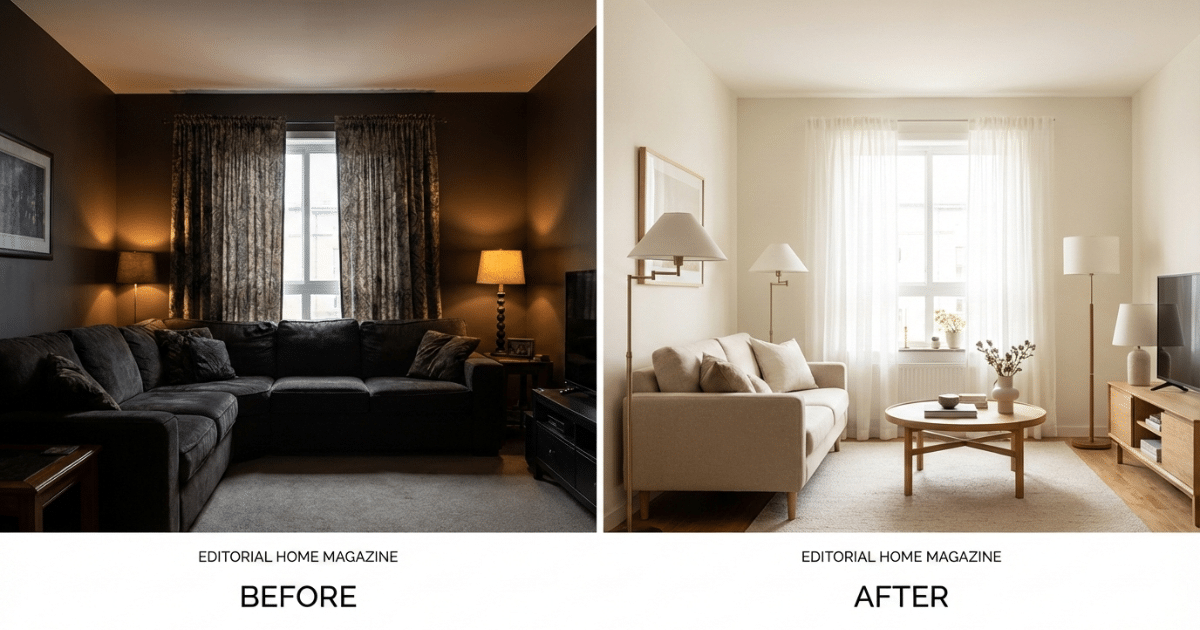
A small space can feel overwhelming when the layout doesn’t work and the lighting feels heavy. I’ve seen it happen so many times rooms that technically have enough square footage, yet somehow feel cramped, dark, and uninspiring. The furniture feels squeezed in. The decor feels random. And no matter how much you tidy up, the space never quite feels calm.
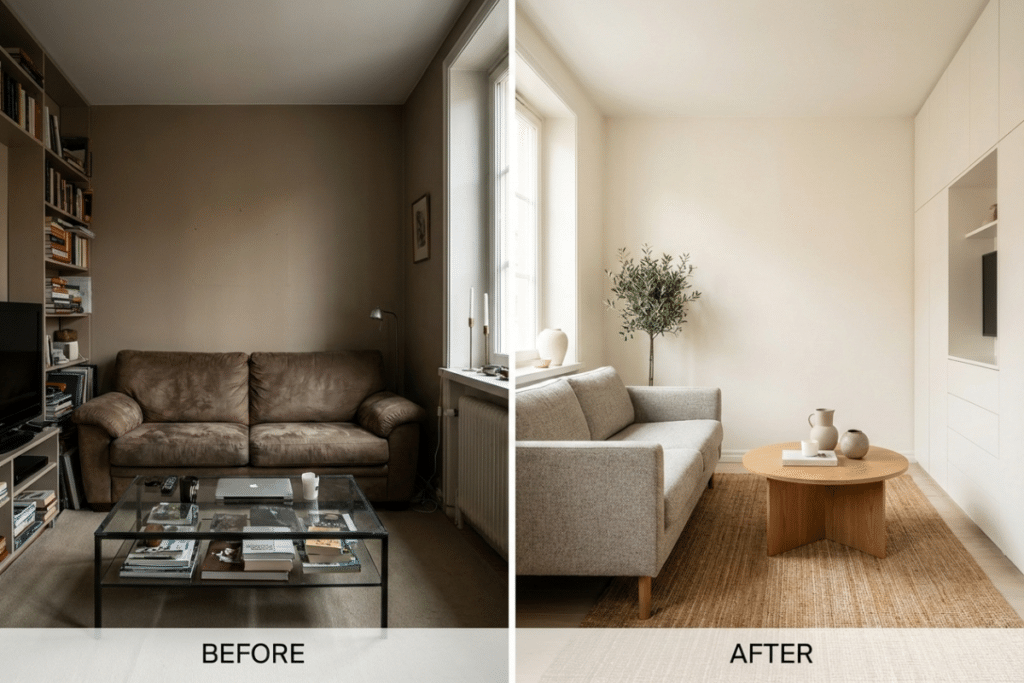
That was exactly the case in this small living room before and after transformation. The room had potential good natural light, solid flooring, and neutral basics but the layout and furniture choices were working against it. Instead of feeling cozy, it felt crowded. Instead of feeling warm, it felt heavy.
This small living room before and after proves something important: you don’t need more space you need better decisions. Smart layout adjustments, lighter tones, and intentional furniture choices can completely redefine a room without knocking down a single wall.
In this guide, I’ll break down every step of this small living room before and after makeover what wasn’t working, the strategy behind the transformation, the exact changes made, and practical lessons you can apply in your own home on a budget.
Table of Contents
The Before When Potential Feels Hidden
At first glance, the room seemed fine.
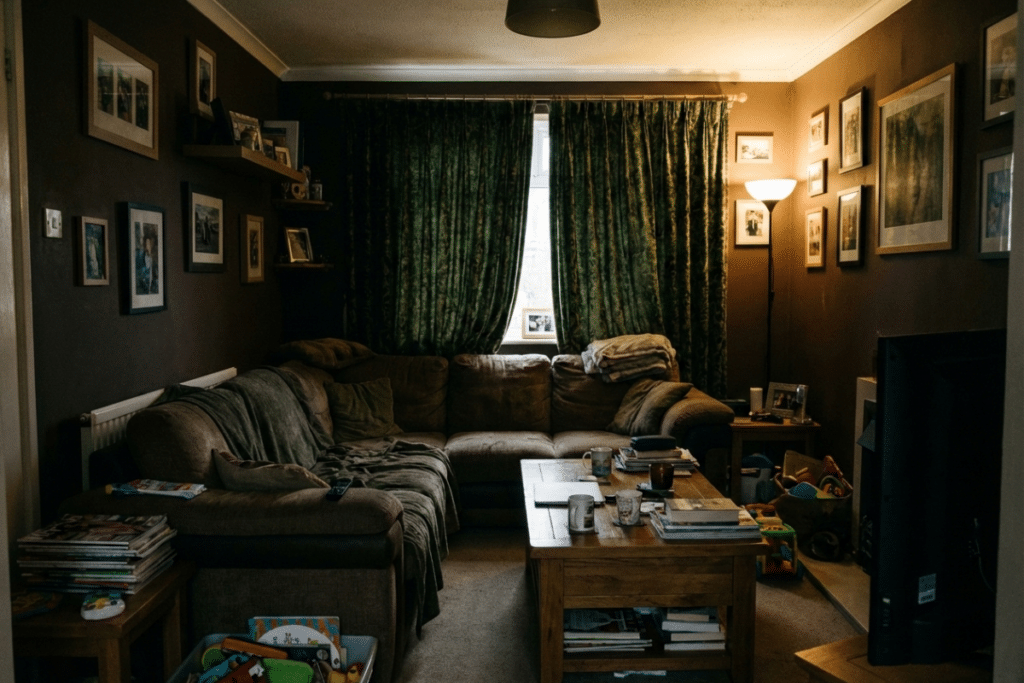
Neutral floors. Decent natural light. Standard ceiling height. Nothing structurally wrong.
But five subtle design decisions were working against it.
The Layout Was Fighting the Room
The sofa was pushed hard against one wall. Across from it, a wide entertainment unit stretched nearly the full length of the opposite wall. In between, a heavy rectangular coffee table sat like a barrier.
There was no natural walking path.
To move through the space, you had to curve awkwardly around furniture. Subconsciously, that creates tension. And tension makes rooms feel smaller.
In many small living room before and after projects, layout is the invisible culprit.
The Furniture Was Too Deep
The sectional was comfortable but deep and bulky. Its visual weight pulled the room inward. Instead of framing the space, it overwhelmed it.
When furniture proportions don’t match room scale, the brain interprets compression.
The Walls Absorbed Light
The medium brown paint added warmth, but it swallowed daylight. Instead of bouncing light around the room, it muted it.
Dark tones can be beautiful but in small rooms without layered lighting, they shrink perception.
Lighting Was Flat
One ceiling fixture. No lamps. No layers.
Flat lighting removes depth and leaves corners in shadow. Shadows visually “close in” a room.
Visual Noise Was Everywhere
Open shelving displayed everything. Multiple side tables crowded the layout. Decorative objects filled surfaces.
Nothing was chaotic but everything competed for attention.
This small living room before and after journey began by recognizing one simple truth:
The room didn’t need more decor.
It needed breathing space.
The Mindset Shift Design With Intention
Before changing anything, we defined a strategy.
Not a Pinterest board.
Not a trend.
A strategy.
Core Objectives
- Improve circulation
- Increase light reflection
- Reduce visual weight
- Restore proportion
- Create calm
The emotional goal was equally important:
Make the room feel relaxed when you walk in.
Every successful small living room before and after transformation starts with intention. Without it, you’re just moving furniture.
The Transformation What Actually Changed
The magic didn’t happen all at once. It happened in layers.
1. Layout Fixes The Foundation
Instead of pushing everything against the walls, the sofa was floated slightly forward just a few inches.
This small adjustment added visual depth.
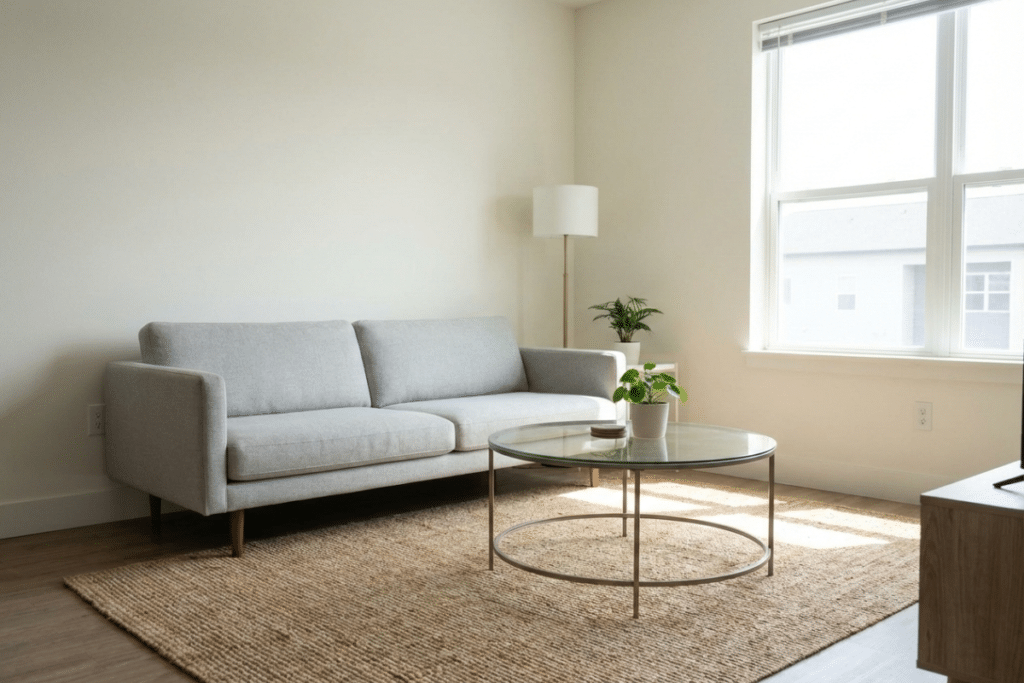
The bulky coffee table was replaced with a slim, round table. Round shapes allow smoother circulation and reduce sharp spatial interruptions.
Walking through the room no longer required navigation.
Flow replaced friction.
And that is often the biggest shift in a small living room before and after makeover.
2. Color Let There Be Light
The brown walls were replaced with a warm soft white.
Not cold white. Not sterile white. Warm white.
Instantly, the room felt larger.
Light colors reflect natural daylight, which expands perceived volume. It’s not just aesthetic — it’s psychological.
Heavy curtains were swapped for sheer panels, allowing filtered sunlight to move freely through the space.
Light became an asset instead of something trapped.
3. Lighting Layers Creating Depth
Lighting became intentional:
- A warm floor lamp in one corner
- A soft table lamp near the sofa
- Warm LED ceiling bulbs
Layered lighting eliminates shadows and creates dimension.
The room began to glow instead of flatten.
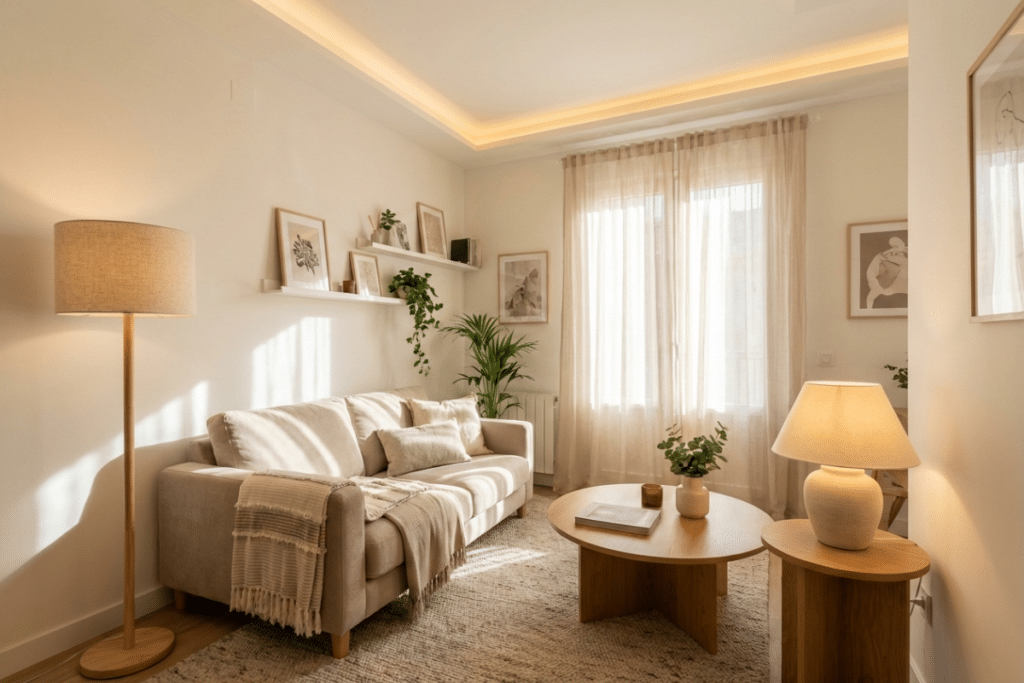
Many small living room before and after transformations underestimate lighting but it’s often the secret weapon.
4. Furniture Scale Restoring Balance
The oversized sectional was replaced with a compact sofa with raised legs.
Raised legs matter.
They expose more visible floor area, which tricks the eye into perceiving openness.
Instead of multiple side tables, one streamlined console with hidden storage was added.
Less bulk. More intention.
5. Editing Decor The Power of Less
Decor wasn’t removed completely. It was edited.
A textured neutral rug anchored the seating area.
Two large framed artworks replaced six small pieces.
Cushions were coordinated instead of mismatched.
Visual calm replaced visual clutter.
The Entire Transformation in One Glance
| Element | Before | After | Emotional Shift |
|---|---|---|---|
| Layout | Blocked pathways | Clear, intentional flow | Feels breathable |
| Wall Color | Light-absorbing brown | Reflective warm white | Feels larger |
| Lighting | Single ceiling fixture | Layered warm lighting | Feels cozy |
| Sofa | Deep oversized sectional | Compact raised-leg sofa | Feels balanced |
| Coffee Table | Heavy rectangle | Slim round table | Feels lighter |
| Storage | Visible clutter | Hidden storage solutions | Feels calm |
Budget Breakdown Smart Spending
The total cost was approximately $1,500.
Paint: ~$220
Sofa: ~$700
Lighting: ~$250
Decor & textiles: ~$180
Storage: ~$150
But here’s the truth:
The biggest impact came from layout and paint the least expensive changes.
This small living room before and after wasn’t about luxury. It was about leverage.
Design Psychology Why It Works
Small rooms respond dramatically to design decisions because the margin for error is smaller.
Here’s what changed psychologically:
- Clear walkways reduce subconscious stress.
- Light-reflecting walls increase perceived space.
- Raised furniture exposes floor area.
- Round shapes improve movement flow.
- Fewer objects reduce mental fatigue.
Design affects emotion.
And that’s the real story behind this small living room before and after transformation.
Common Mistakes That Shrink Small Living Rooms
If you want to avoid reversing progress, avoid these:
- Buying oversized furniture “for comfort”
- Using dark paint without layered lighting
- Blocking windows with heavy curtains
- Overfilling shelves
- Relying on one light source
- Ignoring walkway spacing
Small spaces magnify both mistakes and smart decisions.
The Emotional Difference
Before, the room felt tight.
After, it felt breathable.
Before, it felt dim.
After, it glowed.
Before, it felt crowded.
After, it felt curated.
The square footage didn’t change.
The intention did.
That is the power of a thoughtful small living room before and after makeover.
Final Thoughts
This small living room before and after transformation proves something beautifully simple:
You don’t need more space.
You need more clarity.
When layout, lighting, and proportion align, even the smallest living room can feel open, warm, and inviting.
Real transformation doesn’t start with demolition.
It starts with awareness.
And sometimes, a few inches of movement a lighter wall and a smarter sofa are all it takes to make a room feel like home.
FAQ Small Living Room Before and After
How much does a small living room makeover cost?
A small living room before and after transformation can cost anywhere from $500 to $2,500, depending on how much furniture you replace.
If you focus mainly on layout changes, paint, and lighting, you can dramatically improve the space for under $1,000.
The biggest return on investment usually comes from:
Repainting walls in a light-reflective color
Repositioning furniture for better flow
Adding layered lighting
Full furniture replacement increases the budget but even then, thoughtful decisions matter more than expensive ones.
How do you make a small living room look bigger?
Making a small living room feel larger is more about perception than size.
Here are the most effective strategies:
Use light or warm neutral wall colors
Choose furniture with exposed legs
Keep clear walking paths
Layer lighting instead of relying on one fixture
Avoid overcrowding surfaces
Use mirrors strategically to reflect light
In many small living room before and after transformations, simply improving layout can make the room feel 20–30% larger without adding square footage.
Should furniture be pushed against the wall in a small living room?
Not always.
While pushing furniture against walls seems like it creates space, it can actually make the room feel awkward or flat.
Floating a sofa slightly forward can:
Create visual depth
Improve balance
Define seating zones
The key is proportion and circulation not automatically hugging the walls.
What colors work best in a small living room?
The best colors for small living rooms are:
Warm white
Soft beige
Light greige
Pale gray
Muted earth tones
These tones reflect light and create openness.
Dark colors can work but only when paired with strong layered lighting and balanced contrast.
What is the biggest mistake people make in small living room design?
The biggest mistake in small living room before and after projects is oversized furniture.
Deep sofas, bulky coffee tables, and heavy media units quickly overwhelm the space.
Other common mistakes include:
Using heavy curtains
Overdecorating shelves
Ignoring lighting layers
Blocking natural light
Small rooms require precision. Every piece should earn its place.
Is it worth remodeling a small living room?
Absolutely but remodeling doesn’t always mean renovation.
Most successful small living room before and after transformations focus on:
Layout optimization
Light enhancement
Furniture scaling
Visual simplification
These changes can completely transform the emotional feel of a space without structural work.