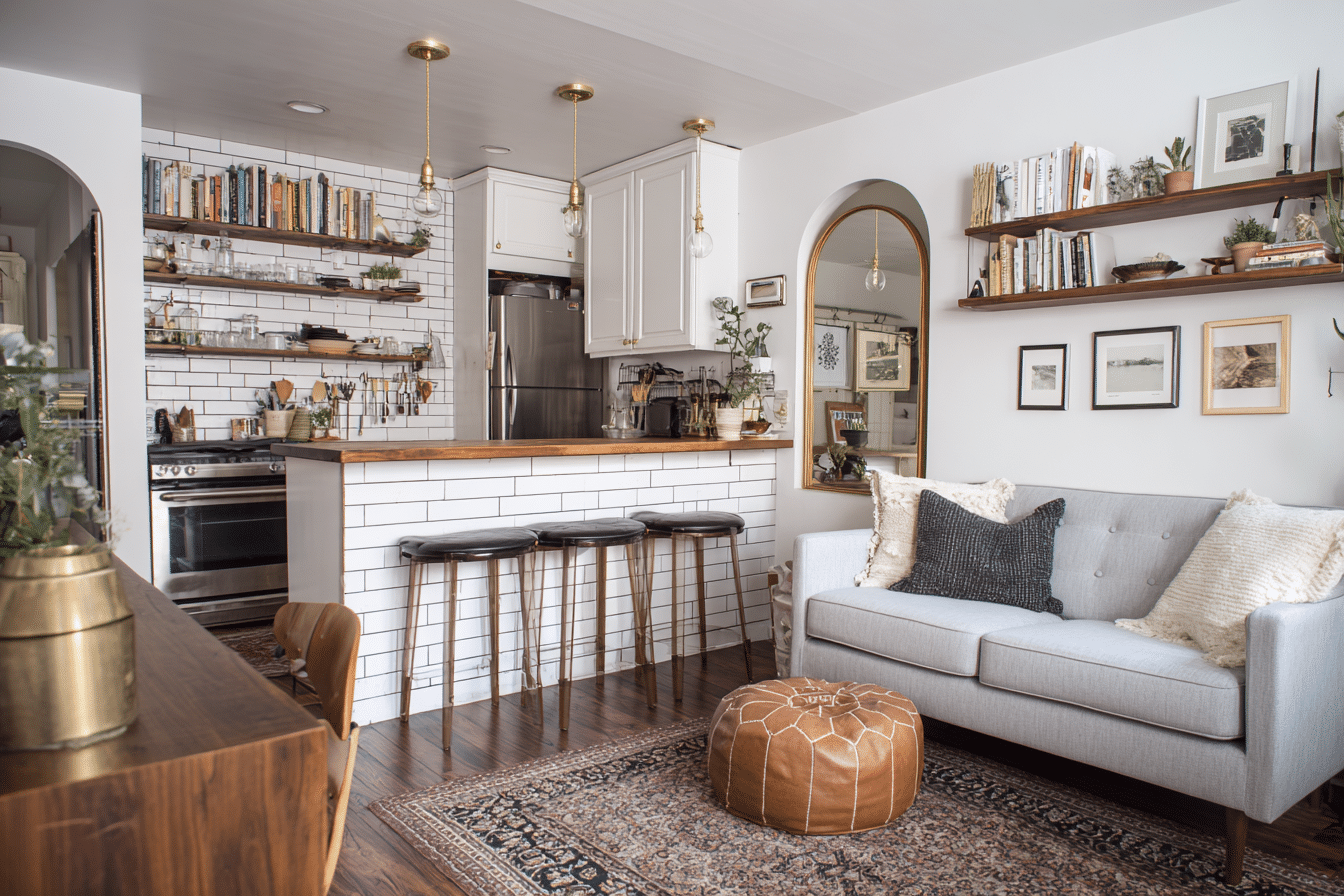
I still remember the moment I realized my space wasn’t just small it was suffocating.
A single chair became a clothes rack. The tiny table doubled as a desk, dining area, and storage unit. Every corner felt crowded, yet somehow nothing felt functional. It wasn’t just about square footage it was how the space felt: chaotic, overwhelming, and oddly exhausting.
If you’ve ever lived in a small apartment, studio, or compact home, you know that feeling. You start to believe that comfort and style belong only to bigger homes.
But here’s the truth:
You don’t need more space you need a better strategy.
“Before and after small space transformations” aren’t just about aesthetics. They’re about reclaiming your environment, your energy, and your daily experience without moving or spending a fortune.
This guide will show you exactly how to do it.
Table of Contents
2. What is a Before & After Transformation?
A before and after small space transformation is the process of turning a cramped, cluttered, or inefficient space into one that feels open, functional, and visually appealing.
It’s not magic it’s intentional design.
Why it’s so powerful:
- Visual impact: The contrast is dramatic and motivating
- Psychological shift: A better space = a better mindset
- Functional upgrade: Your home starts working for you
- Proof of possibility: If others can do it, so can you
These transformations often rely more on strategy than budget.
3. Why Small Spaces Feel Bigger After a Transformation
Small spaces don’t magically grow but they can absolutely feel bigger.
Here’s why:
Layout Matters
A poor layout blocks movement and wastes space.
A smart layout creates flow and openness.
Lighting Changes Everything
- Dark corners = smaller feel
- Layered lighting = depth and warmth
Decluttering Frees Space (Visually + Physically)
Less stuff = more breathing room.
Color Psychology
- Light colors reflect space
- Dark colors absorb it
- Neutral palettes create calm continuity
Visual Flow
When your eye can move easily across a room, it feels larger.
4. The 5 Core Principles of Small Space Transformations
These are the foundation of every successful small space makeover.
1. Declutter First
Nothing works without this step.
Quick checklist:
- Remove unused items
- Clear surfaces
- Keep only essentials + meaningful decor
2. Optimize Layout
Rearranging furniture can completely change a room.
Tips:
- Pull furniture away from walls when possible
- Create clear walking paths
- Avoid blocking natural light
3. Use Light and Mirrors
- Mirrors reflect light and double visual space
- Layer lighting (ceiling + floor + table lamps)
4. Choose Multi-Functional Furniture
In small spaces, every item should earn its place.
Examples:
- Storage ottomans
- Sofa beds
- Foldable desks
5. Add Personality Without Clutter
Minimal doesn’t mean boring.
- Choose a few statement pieces
- Use cohesive color schemes
- Focus on quality over quantity
5. Room-by-Room Transformation Ideas
Small Living Room Before & After
Before:
- Bulky furniture
- Too many decor items
- No clear layout
What changed:
- Slimmer furniture
- Neutral color palette
- Strategic lighting
Why it worked:
- Visual weight reduced
- Space feels open and breathable
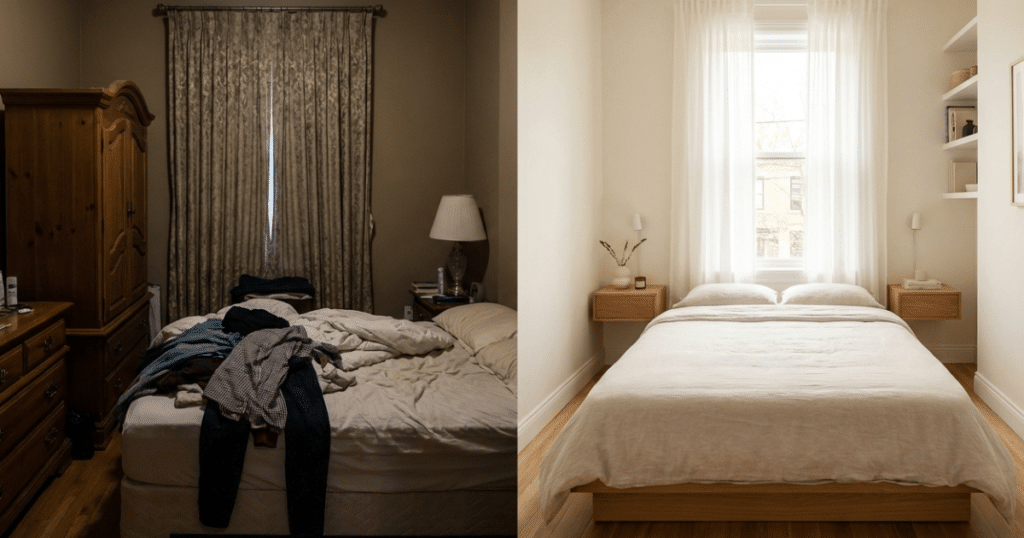
Small Bedroom Glow-Up
(Read: Small Bedroom Glow-Up)
Before:
- Overcrowded bedside tables
- Poor lighting
- No storage system
What changed:
- Under-bed storage
- Wall-mounted lighting
- Simplified decor
Why it worked:
- Floor space increased
- Calm, restful atmosphere created
Tiny Kitchen Makeover
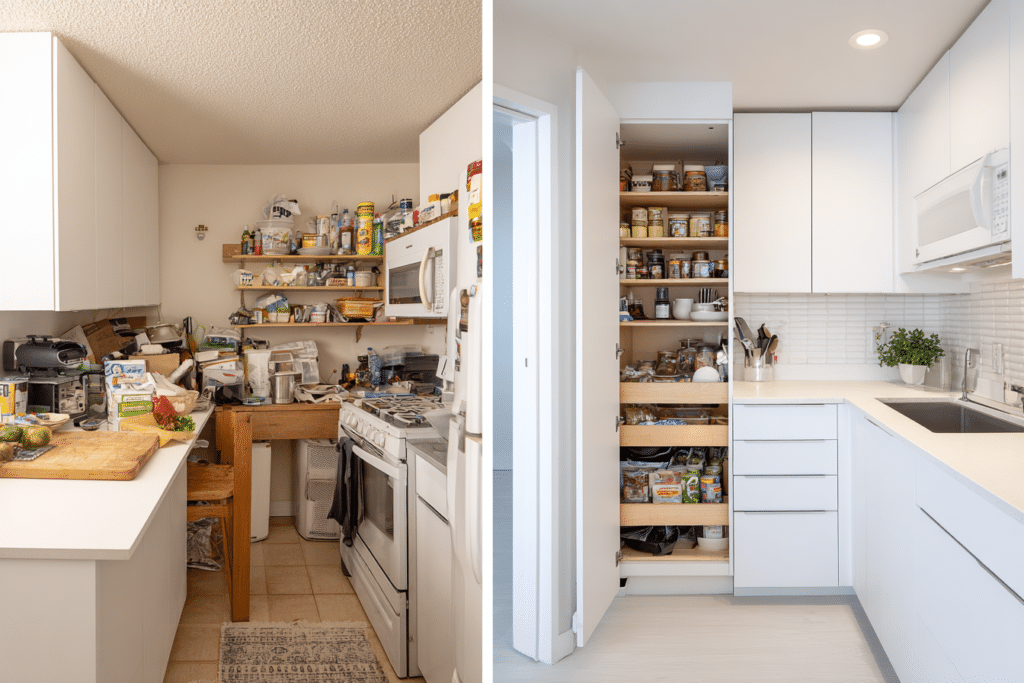
Before:
- Cluttered counters
- No vertical storage
- Dark lighting
What changed:
- Wall shelves added
- Hooks for utensils
- Brighter lighting
Why it worked:
- Vertical space utilized
- Workspace expanded
Small Bathroom Storage Fix
Before:
- Products everywhere
- No organization
- Limited storage
What changed:
- Floating shelves
- Storage baskets
- Minimal countertop items
Why it worked:
- Cleaner look
- Easier daily use
Studio Apartment Zoning
Read: Studio Apartment Layout Ideas
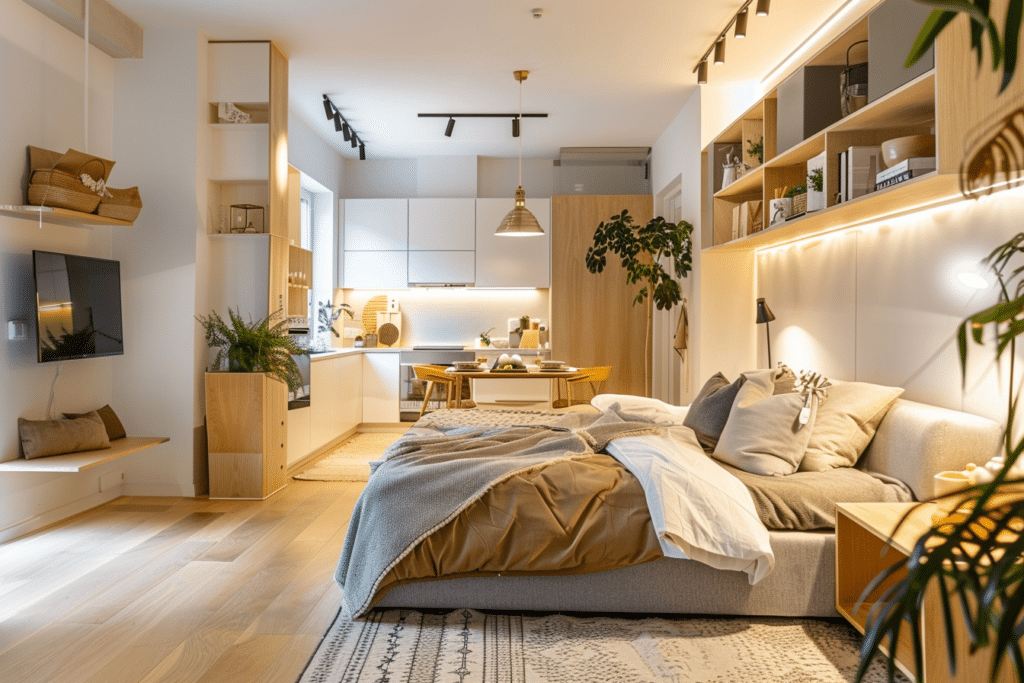
Before:
- Everything blended together
- No separation of functions
What changed:
- Rugs to define areas
- Furniture used as dividers
- Strategic lighting zones
Why it worked:
- Clear “rooms” created within one space
- Improved functionality
6. Budget Small Space Transformations (Very Important)
You don’t need a big budget to create a big impact.
Under $50 Upgrades
- Throw pillows
- LED light strips
- Storage bins
- Wall art prints
DIY Decor Ideas
- Paint old furniture
- Create gallery walls
- Use peel-and-stick wallpaper
Rearranging Furniture (Free!)
Sometimes the best transformation costs nothing.
Try:
- Rotating your layout
- Removing one large item
- Opening up pathways
Lighting Tricks
- Add warm bulbs
- Use floor lamps instead of overhead-only lighting
- Place lights in corners to expand the room visually
7. Before & After Mistakes to Avoid
Even the best intentions can backfire.
1. Overcrowding
Adding too much defeats the purpose.
2. Ignoring Lighting
A well-designed room can still feel bad if lighting is poor.
3. Poor Layout Choices
Function matters more than aesthetics.
4. Too Many Decor Items
Clutter disguised as decor is still clutter.
8. Real Transformation Framework (Step-by-Step System)
Follow this simple system for your own before and after small space transformations.
Step 1: Assess Your Space
Ask:
- What’s not working?
- Where do you feel stress?
Step 2: Declutter
Use this mini checklist:
- Remove duplicates
- Donate unused items
- Clear surfaces
Step 3: Define Zones
Even in tiny spaces:
- Sleep zone
- Work zone
- Relaxation zone
Step 4: Upgrade Lighting
- Add at least 2–3 light sources
- Use warm tones
Step 5: Add Decor
- Keep it minimal
- Focus on texture and color harmony
9. How to Plan Your Own Transformation
Don’t try to do everything at once.
Start Small
- One room
- One corner
- One problem
Create a Vision
Save inspiration images.
Look for “before and after rooms” that match your style.
Set a Budget
Decide:
- What you’ll spend
- What you’ll DIY
Take Action
Progress matters more than perfection.
10. Conclusion
Your space doesn’t have to stay the way it is.
That cramped corner, that cluttered room, that frustrating layout—it’s all transformable.
The beauty of before and after small space transformations is that they prove one powerful truth:
You don’t need more space to live better you just need to use it smarter.
Start today:
- Declutter one surface
- Move one piece of furniture
- Add one light source
Small steps lead to big changes.
And if you’re ready to go further, explore more guides like:
(Read: Small Bedroom Glow-Up)
(Read: Studio Apartment Layout Ideas)
Your transformation starts now.
Frequently Asked Questions (FAQ)
What are before and after small space transformations?
Before and after small space transformations refer to the process of improving a compact area like a studio or small apartment—by optimizing layout, decluttering, and enhancing design. The “before” shows the challenges (clutter, poor lighting, bad layout), while the “after” highlights a functional, stylish, and spacious-feeling result.
Do small space transformations really make a difference?
Yes often dramatically.
Even without changing square footage, you can:
Make a room feel bigger
Improve daily functionality
Reduce stress and visual clutter
Create a more enjoyable living environment
Many people report that a small space makeover improves not just their home—but their mindset.
How much does a small space makeover cost?
It depends on your approach.
Budget-friendly transformations can cost under $50–$200 if you focus on:
Rearranging furniture (free)
Decluttering (free)
Affordable decor (pillows, lighting, storage bins)
A full budget home makeover can still stay under a few hundred dollars with smart choices.
What is the first step in transforming a small space?
Always start with decluttering.
Before buying anything:
Remove unused items
Clear surfaces
Simplify your space
This alone can create a noticeable “after” effect.
How do I make a small room look bigger?
Use these proven techniques:
Choose light, neutral colors
Add mirrors to reflect light
Use multi-functional furniture
Keep walkways clear
Layer your lighting
These strategies improve visual flow and make the room feel more open.
Browse my curated collection on Pinterest